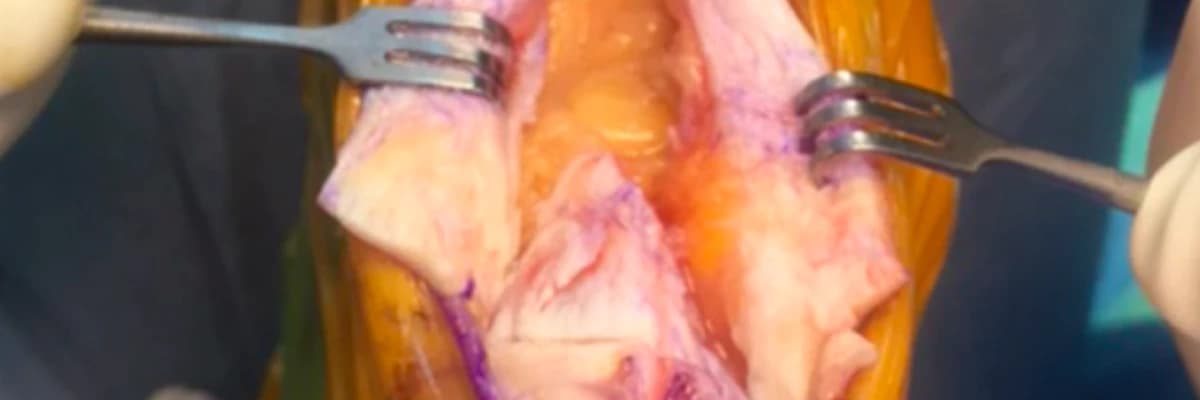
Achilles tendon-splitting approach and double-row suture anchor repair for Haglund syndrome
- Haglund sendromu tedavisinde cerrahi dışı yöntemlerden sonuç alınamayan vakalarda santral Aşil tendon splitting ve çift sıra sütür ankor tekniği güvenilir bir seçenek sunmaktadır.
- Yapılan klinik değerlendirmelerde hastaların AOFAS fonksiyonel skorlarında belirgin artış, ağrı düzeylerini gösteren VAS skorlarında ise istatistiksel olarak anlamlı düşüş gözlemlenmiştir.
- Cerrahi müdahale sonrasında radyografik ölçümlerde sağlanan düzelmeler, yöntemin anatomik yapıyı iyileştirmede ve hastaların yaşam kalitesini artırmada etkili olduğunu kanıtlamıştır.
İçerik yapay zeka ile optimize edilmiştir
Haglund Sendromu ve Cerrahi Tedavi Yaklaşımları
Haglund sendromu, topuğun posterosüperior bölgesinde meydana gelen ağrılı bir deformite olarak tanımlanmaktadır. Bu durumun gelişiminde sıkı Aşil tendonu, yüksek kavisli ayak yapısı ve topuğun dış kısmına basarak yürüme eğilimi gibi faktörler temel nedenler arasında gösterilmektedir. Konservatif (cerrahi dışı) tedavi yöntemlerinden yeterli sonuç alınamayan vakalarda cerrahi müdahale bir gereklilik haline gelmektedir.
Bu bilimsel çalışma, Haglund sendromu tanısı konan hastaların cerrahi tedavisinde uygulanan santral Aşil tendon splitting (tendon ayırma) ve çift sıra sütür ankor tekniğinin klinik ve radyografik sonuçlarını değerlendirmeyi amaçlamaktadır.
Metodoloji ve Değerlendirme Kriterleri
Çalışma kapsamında, santral Aşil tendon splitting ve çift sıra sütür ankor tekniği ile ameliyat edilen 27 hasta retrospektif olarak incelenmiştir. Hastaların klinik durumlarını ve iyileşme süreçlerini analiz etmek amacıyla aşağıdaki parametreler kullanılmıştır:
- AOFAS (Amerikan Ortopedik Ayak ve Ayak Bileği Derneği) Skoru: Ayak bileği ve arka ayak fonksiyonlarını değerlendirmek için kullanılmıştır.
- VAS (Görsel Analog Skala): Hastaların ağrı düzeylerini belirlemek amacıyla uygulanmıştır.
- Radyografik Ölçümler: Ameliyat öncesi ve sonrası dönemde lateral talus-birinci metatarsal açı (TMTA), kalkaneal pitch açısı (CPA) ve Fowler-Philip açısı (FPA) değerleri ölçülmüştür.
Klinik ve Radyografik Bulgular
Yapılan incelemeler sonucunda, cerrahi müdahalenin hastaların yaşam kalitesi ve anatomik yapısı üzerinde istatistiksel olarak anlamlı iyileşmeler sağladığı tespit edilmiştir. Elde edilen veriler şu şekildedir:
Skorlama ve Ağrı Analizi
| Parametre | Ameliyat Öncesi (Ortalama) | Takip Sonu (Ortalama) | P Değeri |
|---|---|---|---|
| AOFAS Skoru | 47.7 puan | 92.4 puan | p < 0.001 |
| VAS (Ağrı) Skoru | 9.0.9 puan | 2.0.6 puan | p < 0.001 |
Radyografik Ölçüm Sonuçları
Takip süresi sonunda hastaların radyografik verilerinde belirgin bir azalma gözlemlenmiştir:
- Lateral TMTA: Ameliyat öncesi 5.2 dereceden, takip sonunda 4.2 dereceye gerilemiştir (p < 0.001).
- CPA: Ameliyat öncesi 21.5 dereceden, takip sonunda 20.5 dereceye düşmüştür (p = 0.005).
- FPA: Ameliyat öncesi 55.6 dereceden, takip sonunda 32.3 dereceye inmiştir (p < 0.001).
Sonuç
Araştırma sonuçları, cerrahi dışı tedavi yöntemlerine yanıt vermeyen Haglund sendromu vakalarında, santral Aşil tendon splitting yaklaşımının oldukça etkili ve güvenilir bir tedavi seçeneği olduğunu kanıtlamaktadır. Klinik skorlardaki artış ve radyografik açılardaki düzelme, yöntemin başarısını desteklemektedir.
Kanıt Düzeyi: Düzey IV, retrospektif vaka serisi.