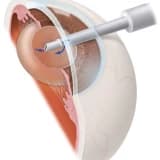
WHAT IS WAVEFRONT?

- Wavefront teknolojisi, gözdeki gece görüşü sapmalarını kişiye özel olarak ölçerek lazer göz ameliyatlarında en yüksek hassasiyeti ve görsel kaliteyi sağlar.
- Modern lazer sistemleri, wavefront verilerini standart profillerine entegre ederek eski teknolojilerin aksine gece görüşü problemlerini önemli ölçüde minimize eder.
- Bu teknoloji, özellikle yüksek numaralı hastalarda parlama ve hare gibi görsel bozuklukları azaltarak 20:20 görüşe ulaşma şansını artırır ve tekrar ameliyat riskini düşürür.

İçerik yapay zeka ile optimize edilmiştir
Understanding Wavefront Technology in Laser Eye Surgery
Wavefront technology is widely regarded as the gold standard treatment in the field of laser eye surgery. However, while it represents the pinnacle of precision, there are specific instances where a standard procedure may yield equally successful results. The necessity of this treatment depends largely on an individual's unique night vision aberrations, which vary naturally from person to person.
During a comprehensive laser eye surgery consultation, your specific visual aberrations are meticulously measured. If these aberrations are found to be minimal, the additional benefits of wavefront treatment may not be significantly higher than standard methods. It is essential to evaluate each case individually to determine the most effective surgical approach.
Evolution of Laser Technology and Night Vision
With older generations of laser technology, wavefront was almost always the superior choice because traditional lasers often exacerbated night vision issues. Regardless of pre-surgery conditions, patients frequently experienced increased difficulties in low-light environments. This made the precision of wavefront data critical for maintaining visual quality.
In contrast, the latest generation of lasers has been engineered using integrated wavefront data. These modern systems utilize updated laser ablation profiles that reflect advanced corneal measurements. Consequently, contemporary laser systems do not significantly increase night vision problems following surgery, even when standard profiles are utilized.
Key Advantages of Wavefront-Guided Surgery
Wavefront technology offers several distinct clinical advantages that enhance the overall success rate of the procedure. By utilizing a Wavescan Aberrometer, surgeons can measure numerous points across the entire cornea, including peripheral areas that are vital when pupils dilate in low light.
Enhanced Night Vision and Reduced Glare
By accounting for peripheral corneal data, wavefront-guided surgery significantly reduces post-operative night vision complications. This technology is particularly effective at minimizing common visual disturbances such as:
- Glare
- Haloes
- Starbursts
Superior Accuracy and Visual Quality
Wavefront provides a more accurate treatment plan, increasing the probability of achieving 20:20 vision compared to standard procedures. It is specifically recommended for patients with high prescriptions or large pupils. Beyond just the quantity of vision, it improves the quality of vision by reducing higher-order aberrations.
| Feature | Wavefront Advantage |
|---|---|
| Visual Acuity | Higher chance of achieving 20:20 vision |
| Visual Quality | Reduces doubling, ghosting, and starbursts |
| Precision | Corrects unique higher-order aberrations |
| Retreatment | Lower probability of needing a laser enhancement |
By eliminating these complex aberrations, the overall clarity and sharpness of the patient's vision are substantially improved. Furthermore, choosing Wavefront technology results in a statistically lower chance of requiring a secondary laser enhancement or re-treatment in the future.
Op. Dr. Ahmet UMAY
Bristol University Ophthalmology Section, United Kingdom